
DL VEWS provides engineered culvert pipe solutions throughout Connecticut using high-performance products designed for both rehabilitation and new installations. Our primary culvert systems include solid-wall HDPE culvert pipe, corrugated metal pipe, DuroMaxx steel-reinforced polyethylene pipe, Snap-Tite trenchless rehabilitation liners, Spirolite, Weholite, and custom Channeline GRP liners for specialty applications. These products are selected based on site conditions, hydraulic requirements, corrosion resistance needs, and structural load demands to ensure long-term performance in Connecticut’s demanding roadway and drainage environments. HDPE culvert pipe is especially popular for its smooth interior flow characteristics, corrosion resistance, lightweight handling, and 100+ year design life, making it ideal for municipal, DOT, and stormwater infrastructure projects.
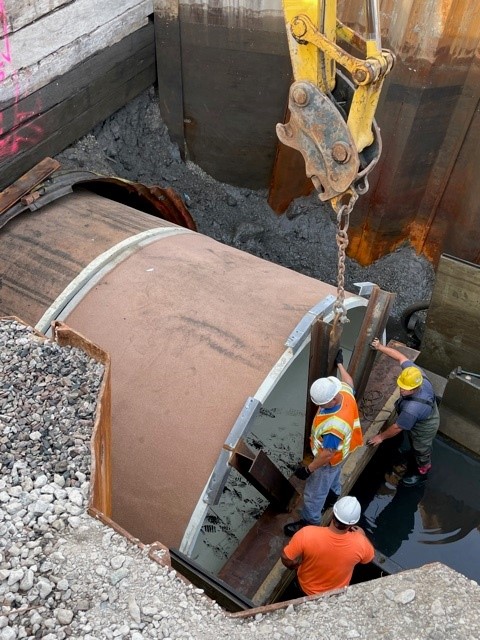
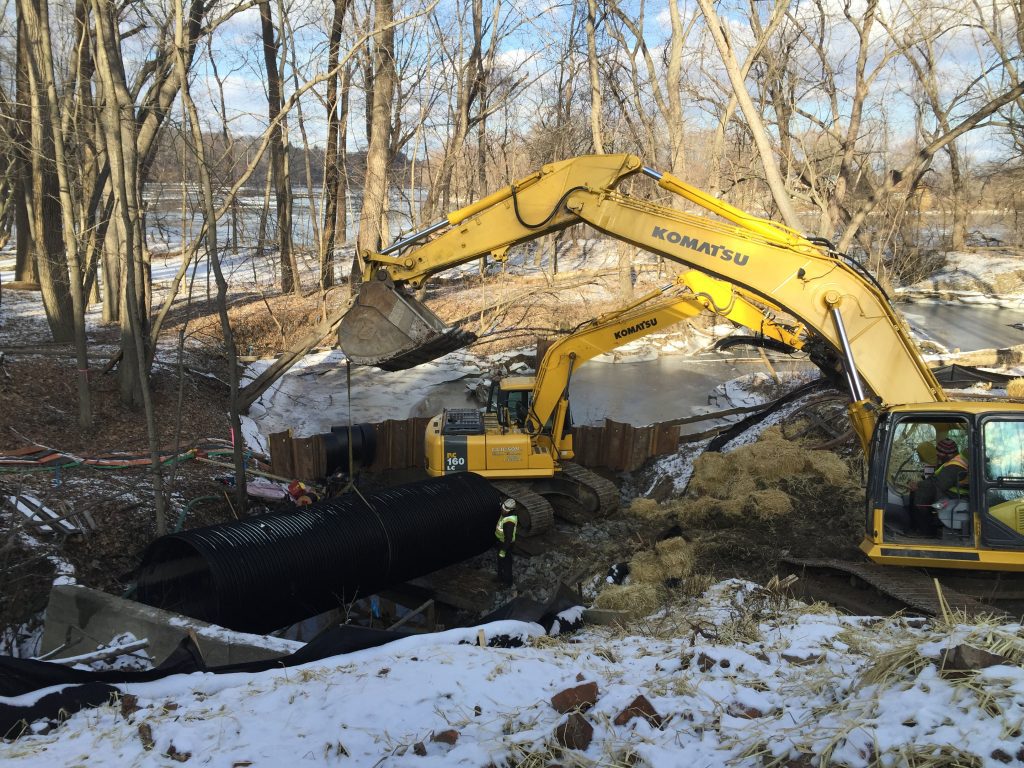
Culvert pipe in Connecticut is essential for carrying water beneath roads, railways, embankments, and other transportation corridors. Over time, these systems degrade from corrosion, hydraulic wear, shifting soils, and aging materials.
DL VEWS offers complete culvert pipe rehabilitation services in Connecticut, including:
Our engineered systems are designed to meet strict Connecticut infrastructure requirements while minimizing traffic interruption and environmental disturbance. Every culvert solution is selected based on hydraulic performance, structural demands, and long-term durability.
A successful culvert rehabilitation project begins with a thorough inspection. DL VEWS performs on-site culvert pipe inspections throughout Connecticut to assess:
Our inspection process helps municipalities, engineers, and contractors identify the most cost-effective and structurally sound rehabilitation approach before failure becomes critical.
We also provide:
The timeline for culvert pipe rehabilitation in Connecticut depends on several project-specific factors, including:
Sliplining and trenchless culvert rehabilitation methods typically require far less time than traditional excavation replacement, allowing projects to be completed faster with reduced roadway disruption.
Ultimately, 50-100 years but we often consider designing for closer to 75-100+ years as most of the materials are meant to last at least that long. All project aspects must be considered throughout design process including abrasion of the stream materials, pH of the water and soils, resistivity, pipe wall thicknesses, etc.
There are many methods of culvert rehabilitation which include but are not limited: paved inverts, sliplining or relining, dig and replace, or spot repair, joint repairs, structural plate lining and tunnel liner plate lining, spirally wound liners. DLVEWS, Inc. always focuses on pointing the customer towards the proper consideration that will meet their structural needs as well as their hydraulic needs; two of the most important criteria when considering a culvert rehab project.
At this time, folks have many options to choose from which makes culvert rehab a terrific option to consider any time something comes up. Even if a culvert is partially failed, do not hesitate to contact us for a potential solution. DLVEWS has been involved in many project recently where the pipe was already in severe condition and we were able to rehabilitate them.

One of the most expensive parts of a culvert lining project is the installation of a new pipe. If you want to cut down on costs but still maintain a long-lasting, fully functional culvert, then it’s time to think about using a culvert lining system such as Snap-Tite.
Snap-Tite has a proven record in the culvert rehabilitation business, and their products are designed to be cost-effective, flexible, and easy to install. No more overpriced installation teams. No more excessive excavation stress.
Just Snap-Tite, and it’s all right.
Channeline is a glass reinforced plastic; better known in the industry as GRP. A hyper-versatile solution for the stormwater and wastewater industry, Channeline can be used for some of the toughest environments including high H2S (hydrogen sulfide), brownfields, pH sensitive areas, highly salted areas, etc. It can be used to slipline and rehab culverts & sanitary sewers. It can also cover a wide range of live and dead loads. Channeline is often utilized in areas where excavation pits must remain minimized or alleviated. It can be designed in multi-piece segments to be lowered through existing manhole or access points as necessary.
Because of it’s versatility in design, Channeline has the ability to make unique shape offerings which will optimize your hydraulics while optimizing constructability. Unique shape solutions include, but not limited to:
Egg or Ovoid
Box Culverts
Box Culverts with a cunette for concentrating flow during low water events
Cattle crossing or pedestrian tunnel shapes (popular in railroad culverts)
Pipe Arches
Circular
And much more
DuroMaxx steel reinforced polyethylene (SRPE) pipe combines the strength of steel with the durability of plastic, resulting in an extraordinarily strong and durable pipe. DuroMaxx meets the long-term structural demands of the most difficult sanitary sewer, storm sewer, irrigation, stormwater detention, and wastewater projects.

Many culvert pipes installed 40–50+ years ago across Connecticut are reaching the end of their service life. Failures are occurring more frequently due to corrosion, abrasion, joint separation, and backfill loss.
Metal culvert pipes are vulnerable to abrasion from rocks and debris carried by streams, which gradually wear down the pipe material. Corrosion and soil backfill loss further weaken the structure, eventually leading to leaks or failure.
Concrete culvert pipes, while more rigid, commonly fail at their joints. Natural shifting over time causes cracks and joint separation, allowing backfill loss that can lead to sinkholes or structural collapse.
Dig-and-replace is often not feasible due to roadway closures, environmental impacts, and public disruption. Properly engineered culvert pipe solutions frequently last longer than replacement and are more cost-effective and environmentally friendly.
DL VEWS removes the guesswork from culvert pipe projects by conducting on-site inspections throughout Massachusetts. Our team evaluates the structure, environment, and project scope to determine the most effective long-term solution.
During an inspection, we assess:
The original culvert pipe materials and any existing coatings
Pipe alignment and joint condition
Prior inspection reports and performance changes over time
Visible defects such as corrosion, spalling, or missing components
Surrounding roadway, slopes, and runoff areas
Whether hydraulic flow is performing at its intended capacity
These evaluations allow us to recommend culvert pipe solutions with service lives of 75–100+ years, often making future repairs unnecessary.
The approach to culvert pipe projects depends on pipe shape, original material, location, extent of damage, and environmental conditions. DL VEWS selects methods that provide long-term structural integrity while minimizing disruption.
The most common and effective method is sliplining, where a new pipe is installed inside the existing culvert pipe and the annular space is filled with low-density cellular concrete. This material is self-leveling and self-compacting, providing immediate reinforcement.
In cases where joint failure is the primary concern, internal joint repair systems such as HydraTite mechanical seals are used to permanently stabilize connections and prevent backfill loss.
Traditional methods such as coatings, shotcrete, or spot repairs may still be used when appropriate, but modern culvert pipe solutions often eliminate the need for these approaches.
Culvert pipe projects that utilize lining or sliplining methods take significantly less time than full dig-and-replace work. This is one of the primary advantages of modern culvert pipe solutions.
Project timelines depend on several factors, including:
Culvert pipe length and diameter
Water bypass requirements
Cleaning and debris removal needs
Grouting requirements
Site access and cleanup
Each culvert pipe project is evaluated individually to ensure safety, efficiency, and minimal disruption to traffic and surrounding areas.
DL VEWS provides hands-on expertise, engineered solutions, and long-term durability for culvert pipe projects throughout Connecticut. Our experience allows clients to rehabilitate culverts of all shapes and sizes, meet DOT specifications, minimize environmental impact, and complete projects efficiently.
Our solutions are designed to last for decades, giving municipalities, engineers, and contractors confidence that once the work is completed, it will not need to be revisited in the near future.